
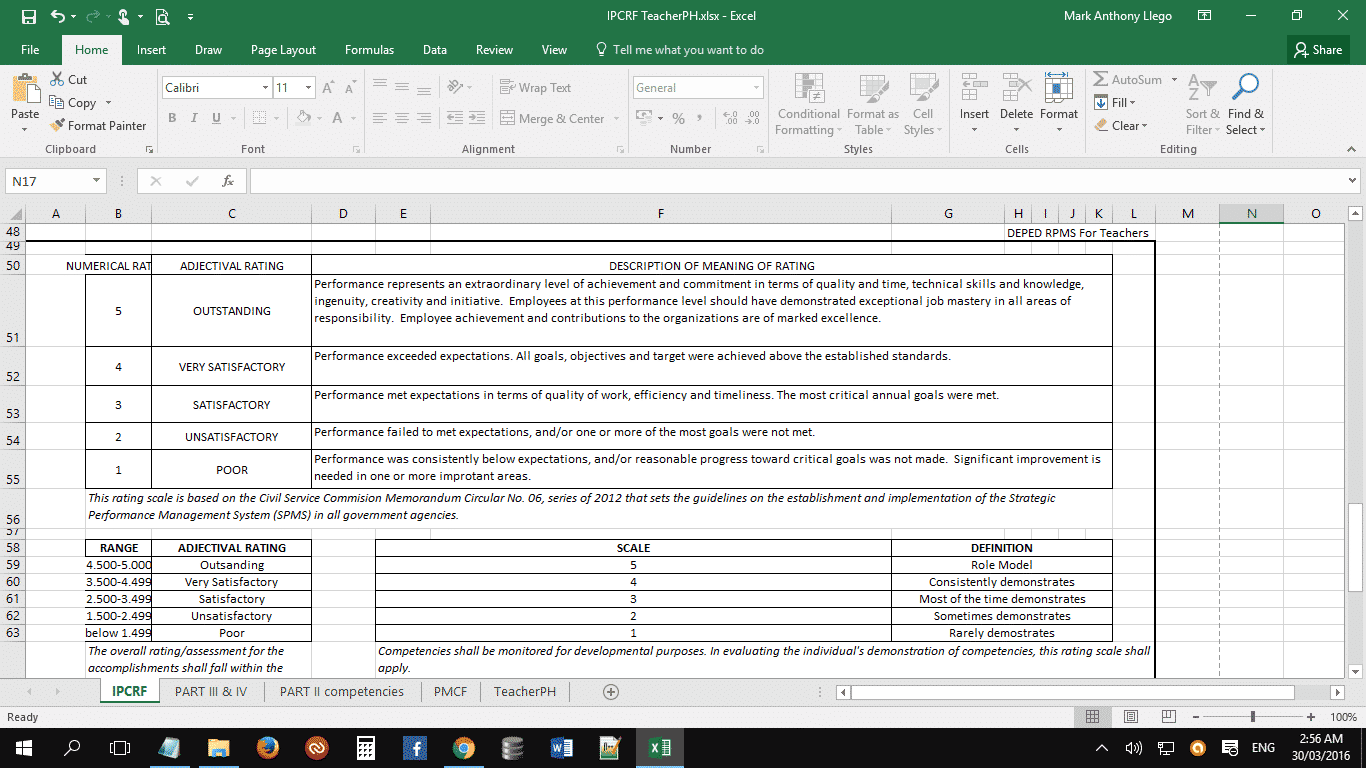
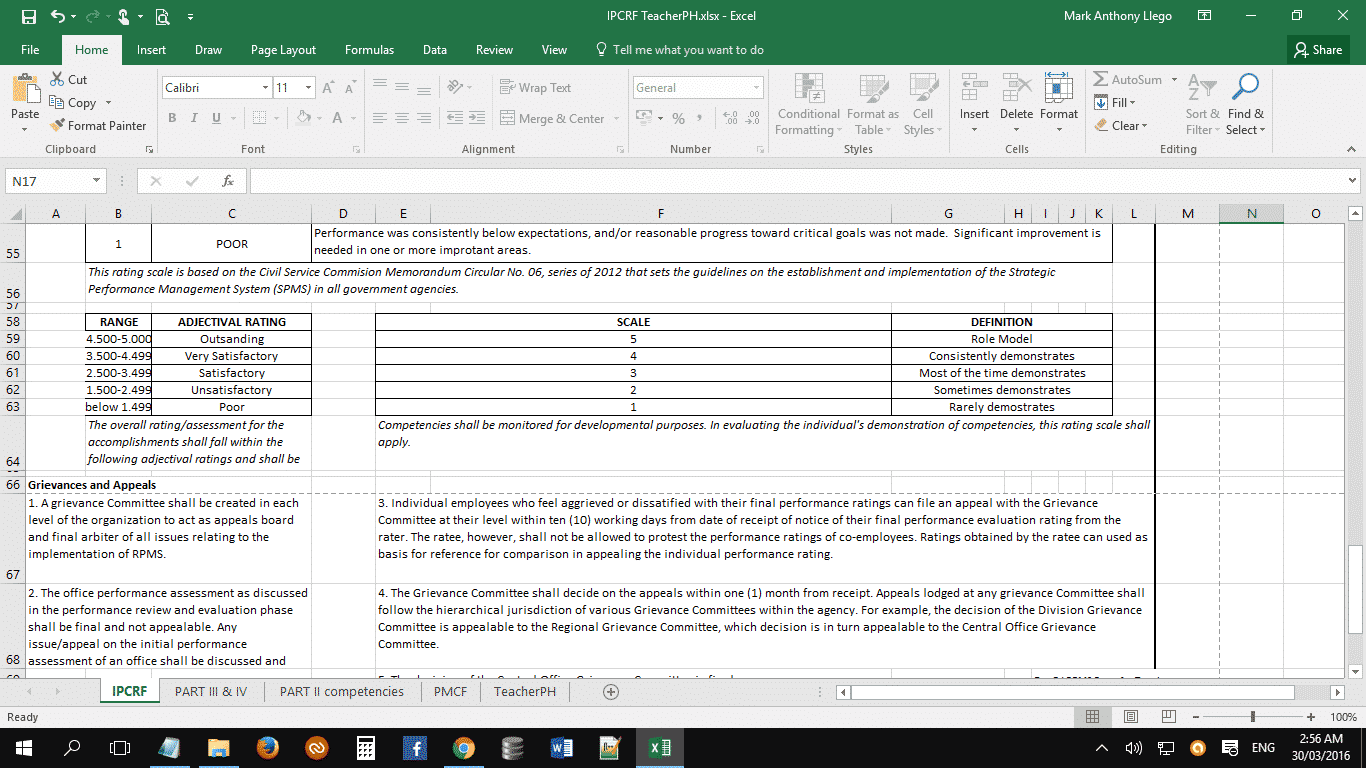
This rating scale is based on the Civil Service Commission Memorandum Circular No. 06, series of 2012 that sets the guidelines on the establishment and implementation of the Strategic Performance Management System (SPMS) in all government agencies.
Update: OPCRF of School Heads and IPCRFs of Teaching and Non-Teaching Employees in Schools
| NUMERICAL RATING | ADJECTIVAL RATING | DESCRIPTION OF MEANING OF RATING |
| 5 | OUTSTANDING | Performance represents an extraordinary level of achievement and commitment in terms of quality and time, technical skills and knowledge, ingenuity, creativity and initiative. Employees at this performance level should have demonstrated exceptional job mastery in all areas of responsibility. Employee achievement and contributions to the organizations are of marked excellence. |
| 4 | VERY SATISFACTORY | Performance exceeded expectations. All goals, objectives and target were achieved above the established standards. |
| 3 | SATISFACTORY | Performance met expectations in terms of quality of work, efficiency and timeliness. The most critical annual goals were met. |
| 2 | UNSATISFACTORY | Performance failed to met expectations, and/or one or more of the most goals were not met. |
| 1 | POOR | Performance was consistently below expectations, and/or reasonable progress toward critical goals was not made. Significant improvement is needed in one or more important areas. |
The overall rating/assessment for the accomplishments shall fall within the following adjectival ratings and shall be in three (3) decimal points.
| RANGE | ADJECTIVAL RATING |
| 4.500-5.000 | Outstanding |
| 3.500-4.499 | Very Satisfactory |
| 2.500-3.499 | Satisfactory |
| 1.500-2.499 | Unsatisfactory |
| below 1.499 | Poor |
Competencies shall be monitored for developmental purposes. In evaluating the individual’s demonstration of competencies, this rating scale shall apply.
| SCALE | DEFINITION |
| 5 | Role Model |
| 4 | Consistently demonstrates |
| 3 | Most of the time demonstrates |
| 2 | Sometimes demonstrates |
| 1 | Rarely demostrates |
Grievances and Appeals
- A grievance Committee shall be created in each level of the organization to act as appeals board and final arbiter of all issues relating to the implementation of RPMS.
- The office performance assessment as discussed in the performance review and evaluation phase shall be final and not appealable. Any issue/appeal on the initial performance assessment of an office shall be discussed and decided during the performance review conference.
- Individual employees who feel aggrieved or dissatisfied with their final performance ratings can file an appeal with the Grievance Committee at their level within ten (10) working days from date of receipt of notice of their final performance evaluation rating from the rater. The ratee, however, shall not be allowed to protest the performance ratings of co-employees. Ratings obtained by the ratee can used as basis for reference for comparison in appealing the individual performance rating.
- The Grievance Committee shall decide on the appeals within one (1) month from receipt. Appeals lodged at any grievance Committee shall follow the hierarchical jurisdiction of various Grievance Committees within the agency. For example, the decision of the Division Grievance Committee is appealable to the Regional Grievance Committee, which decision is in turn appealable to the Central Office Grievance Committee.
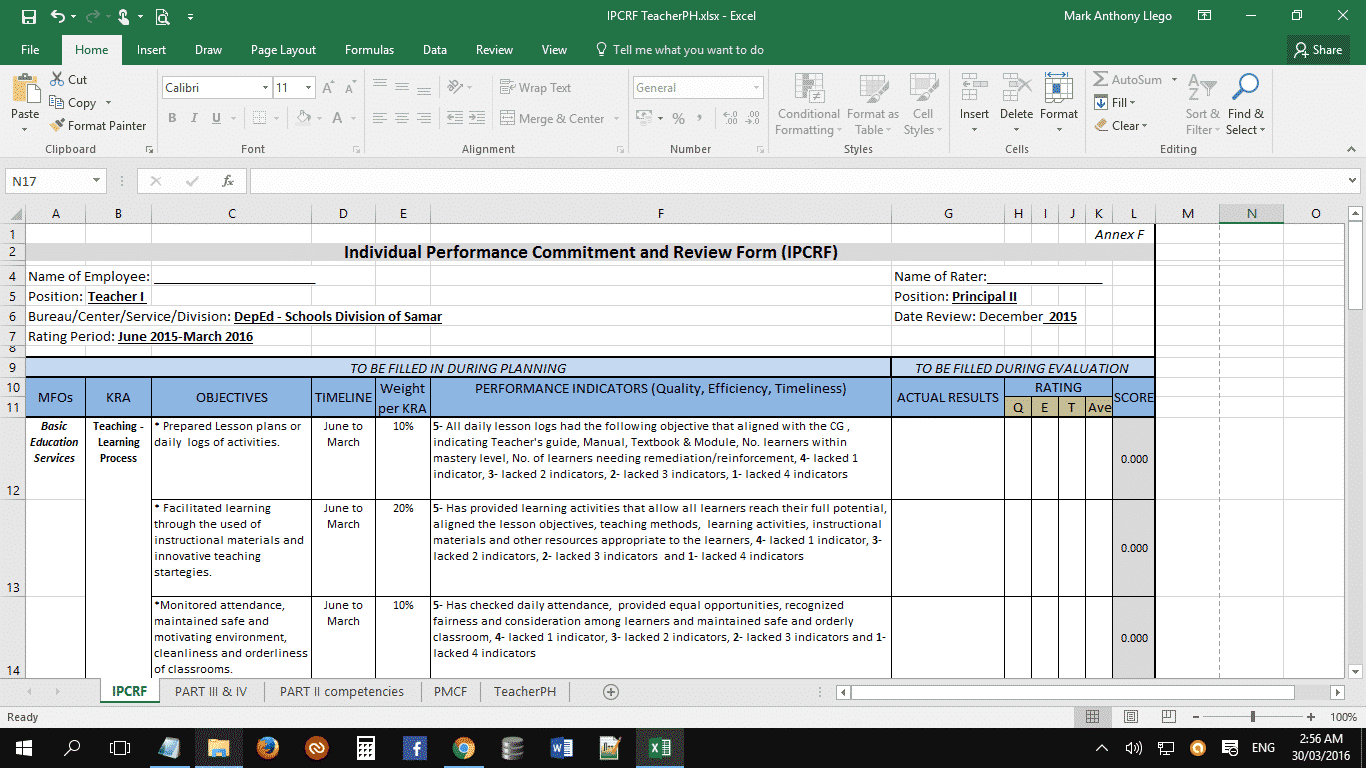
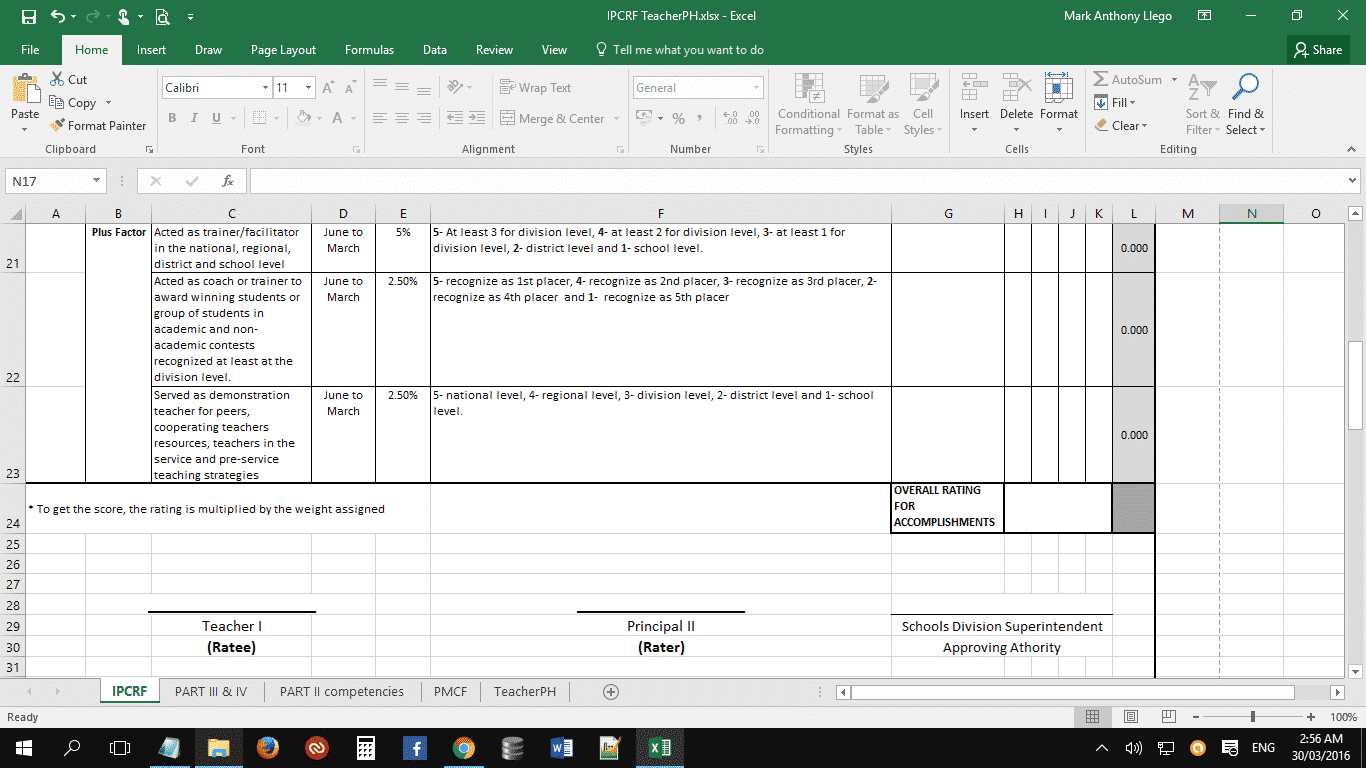
Individual Performance Commitment and Review Form (IPCRF) Template
Download: https://www.facebook.com/groups/teacherph/ – Group Files
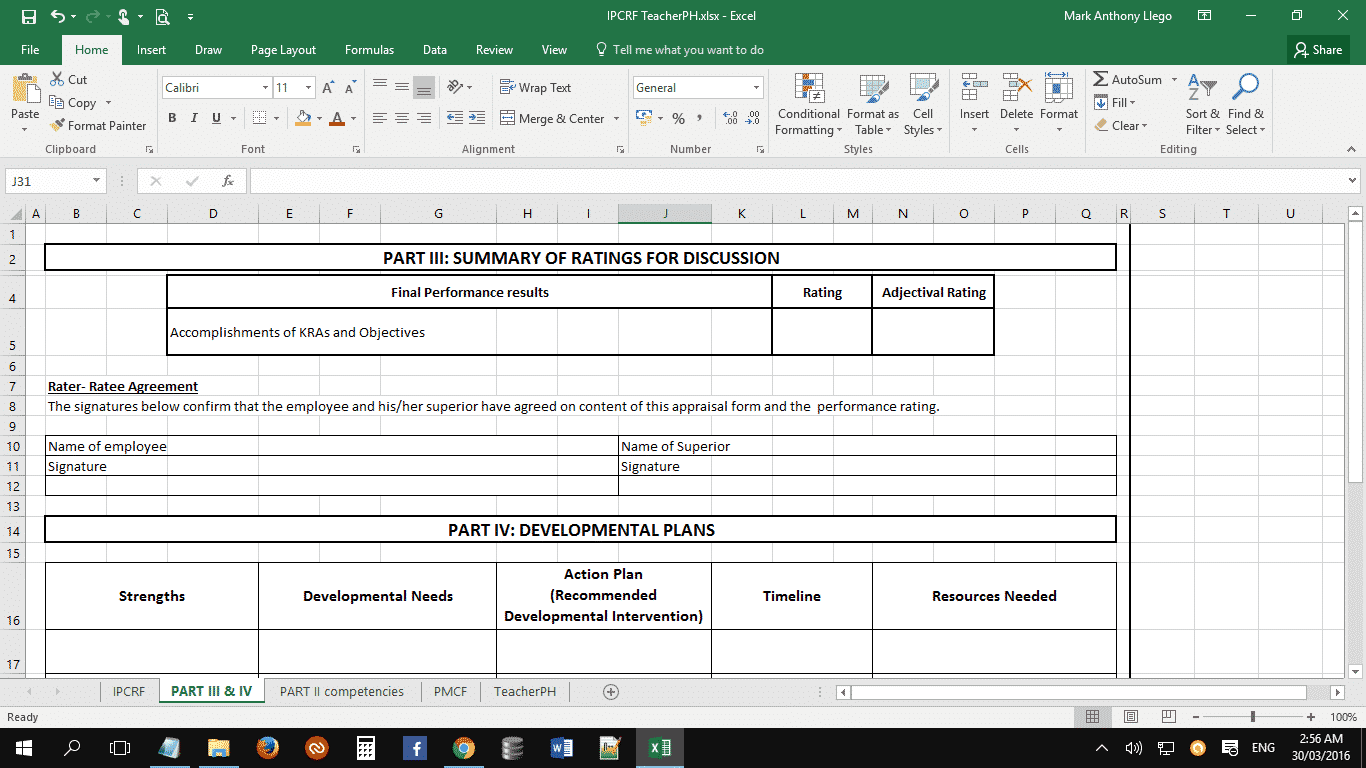
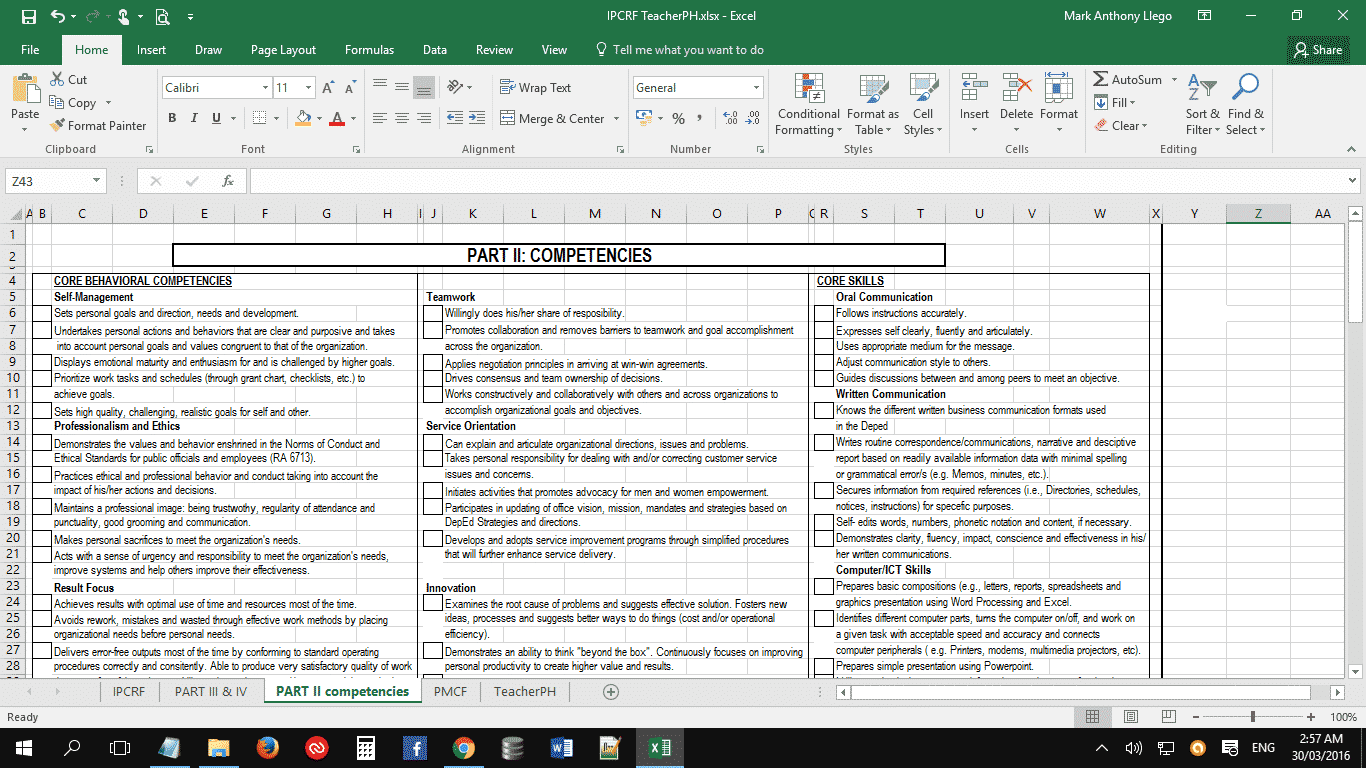
Download: https://www.facebook.com/groups/teacherph/ – Group Files
Read:
- Guidelines on the Enhanced School Improvement Planning (SIP) Process and the School Report Card (SRC)
- Guidelines on the Establishment and Implementation of the Results-Based Performance Management System (RPMS)
- Portfolio and Rubrics Assessment Tool for RPMS Evaluation
- School Improvement Plan Guidebook
- Collage Templates for Brigada Eskwela and Senior HS Souvenir Books
- DepEd Computerization Program (DCP) Guide

Leave a Reply